CenterPoint says it is hardening Houston-area grid against outages
CenterPoint says its Houston grid upgrades are already trimming outage time, but Beryl showed how much Harris County still depends on the next storm test.
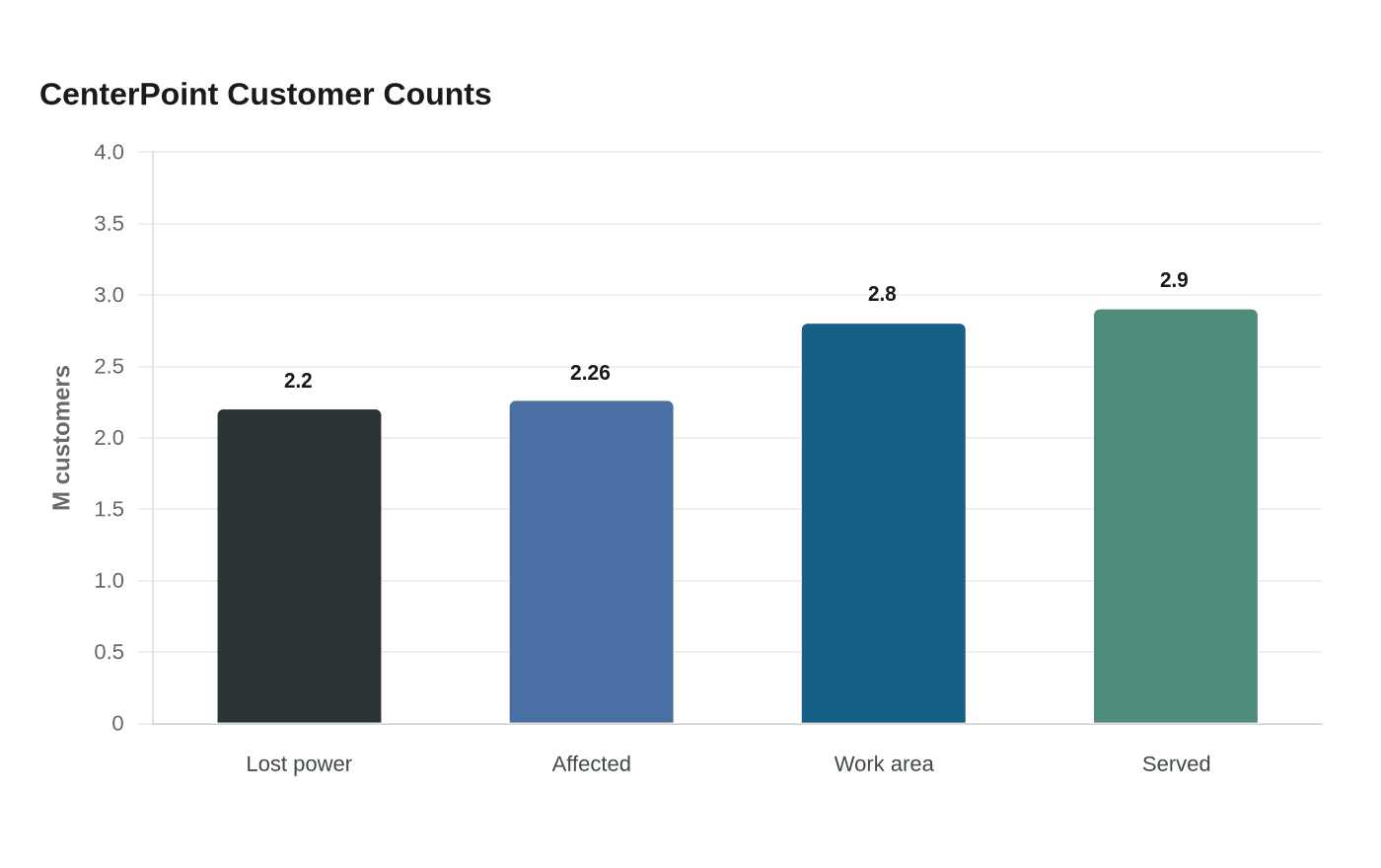
More than 2.2 million CenterPoint customers lost power when Hurricane Beryl made landfall in Texas on July 8, 2024. CenterPoint’s latest hardening push is designed to make Houston-area outages shorter, narrower, and easier to recover from. Its work now covers a region of more than 2.8 million customers across 12 counties, and CenterPoint has logged a 45% drop in total outage minutes through June 30, 2025 compared with the same stretch of 2024.
What CenterPoint is rebuilding
CenterPoint’s resiliency program covers the Greater Houston area, spanning more than 5,000 square miles and serving about 2.9 million electric customers. CenterPoint puts the region at the highest weather hazard risk of any major U.S. metro area.
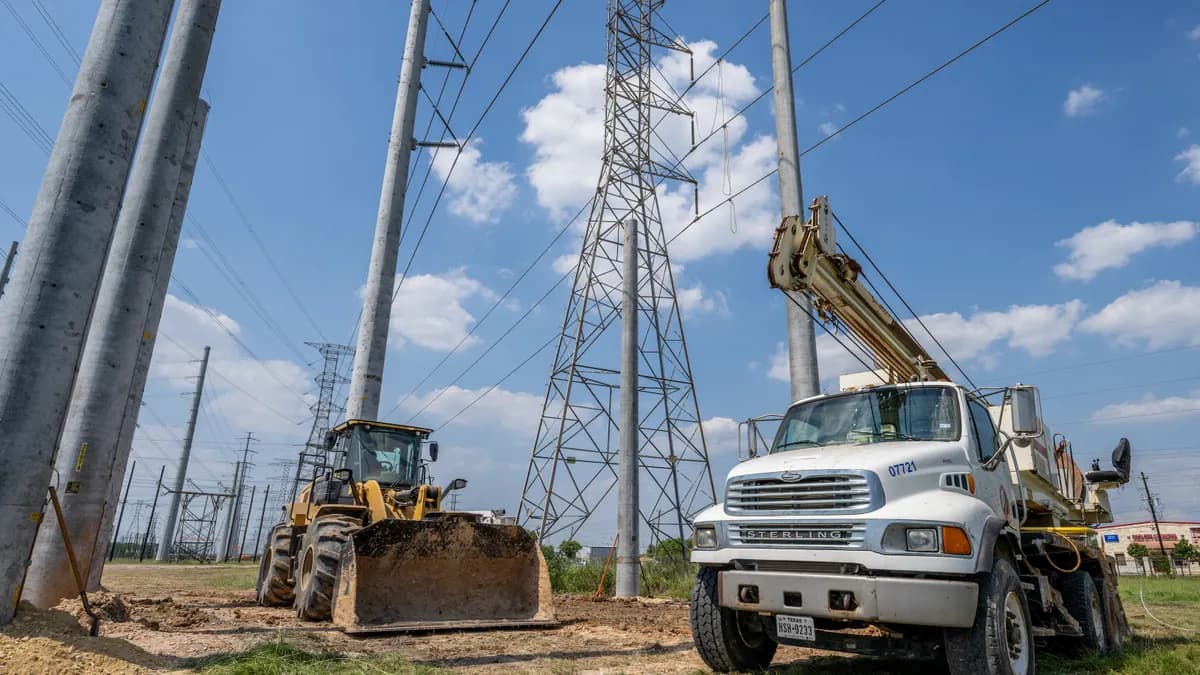
The tool kit includes hardening overhead infrastructure, undergrounding some lines, vegetation management, automation, and monitoring. In September 2024, the second phase of CenterPoint’s Greater Houston Resiliency Initiative was aimed at strengthening the electric grid across the region and moving the work from emergency response into a longer construction program.
Where the work is happening
This is not a single neighborhood project. The work is spread across the 12-county Greater Houston area, layering upgrades onto the same large network that serves Harris County suburbs, Houston proper, and the surrounding region. Exposure is uneven: some corridors face tree-related damage, others see repeated failures tied to overhead equipment, and still others depend on the same transmission and distribution backbone during severe heat, wind, and tropical weather.
The changes CenterPoint has pointed to are on poles and power lines. CenterPoint installed nearly 4,600 storm-resilient poles in the first two months of the program, then completed all 42 of its initial post-Beryl commitments. Those completed commitments included 350 more miles of newly hardened power lines and more than 1,100 stronger, storm-resilient poles.
Hardened poles and rebuilt line segments can reduce damage from wind and falling debris, while vegetation management and automation can help crews isolate problems faster when outages do happen.
The timeline CenterPoint has put on the record
The company’s public timeline begins with Hurricane Beryl. On July 9, 2024, CenterPoint was working around the clock to restore power to 2.26 million customers affected by the storm. That response quickly became a political and regulatory issue: on July 26, 2024, Gov. Greg Abbott directed the Texas Public Utility Commission to investigate CenterPoint after the widespread outages.
CenterPoint then made public an independent expert report on Oct. 25, 2024. That after-action review included 77 recommendations to improve readiness. By March 7, 2025, CenterPoint had surpassed a 50% completion milestone for its resiliency efforts ahead of hurricane season.
By mid-2025, the upgrades were starting to show up in CenterPoint’s performance data. CenterPoint put total electric service outage minutes down approximately 45% through June 30, 2025 compared with the same period in 2024. In a separate company release, the Greater Houston Resiliency Initiative helped deliver a 45% reduction in customer outage minutes across Houston in the first half of 2025. CenterPoint’s 2025 year-end review later put outages down by more than 100 million minutes compared with 2024.
The money and the bill impact
The hardening effort is not free, and the cost has already been folded into a settlement and rate-setting process. In June 2025, CenterPoint and Houston-area cities reached a $3.2 billion resiliency plan settlement. Texas regulators later approved a $2.9 billion plan to harden the Houston power grid, with customers expected to see about a $1 monthly bill increase starting in 2026.
What Beryl changed, and what it did not
Beryl is the clearest test of CenterPoint’s resilience claims. The work now being counted in poles, miles of hardened line, and outage-minute reductions came after Beryl, not before it. That means the 2024 storm cannot be used to prove the current system would have held up better, because the most important upgrades were not yet in place.
What the company can point to instead is a post-Beryl buildout and a set of measurable targets: 77 recommendations from the independent review, 42 initial commitments completed, 350 miles of hardened line, more than 1,100 stronger poles, and a 45% reduction in outage minutes through mid-2025.
This article was produced by Prism’s automated news system from verified source data, official records, and press releases, then run through automated quality and moderation checks before publishing. The system is built and supervised by the people who set the standards it runs under. Read our full AI policy.
Did this article answer your question?