Harris County sues Roving Meadows again over sewage complaints
Crosby residents say sewage has flooded yards and backed into homes for nearly two decades. Harris County is back in court over Roving Meadows Utilities and the ditches it feeds.

Harris County returned to court over Roving Meadows Utilities Inc. after years of sewage complaints in Crosby, where residents have described a foul smell, standing wastewater and contamination spreading through neighborhood ditches.
The county first sued the wastewater operator in February 2025 over discharges from its Crosby facility. In that case, county inspectors allegedly found extremely high levels of E. coli bacteria and raw sewage leaking directly into county ditches, conditions that raised immediate health concerns for people living nearby.
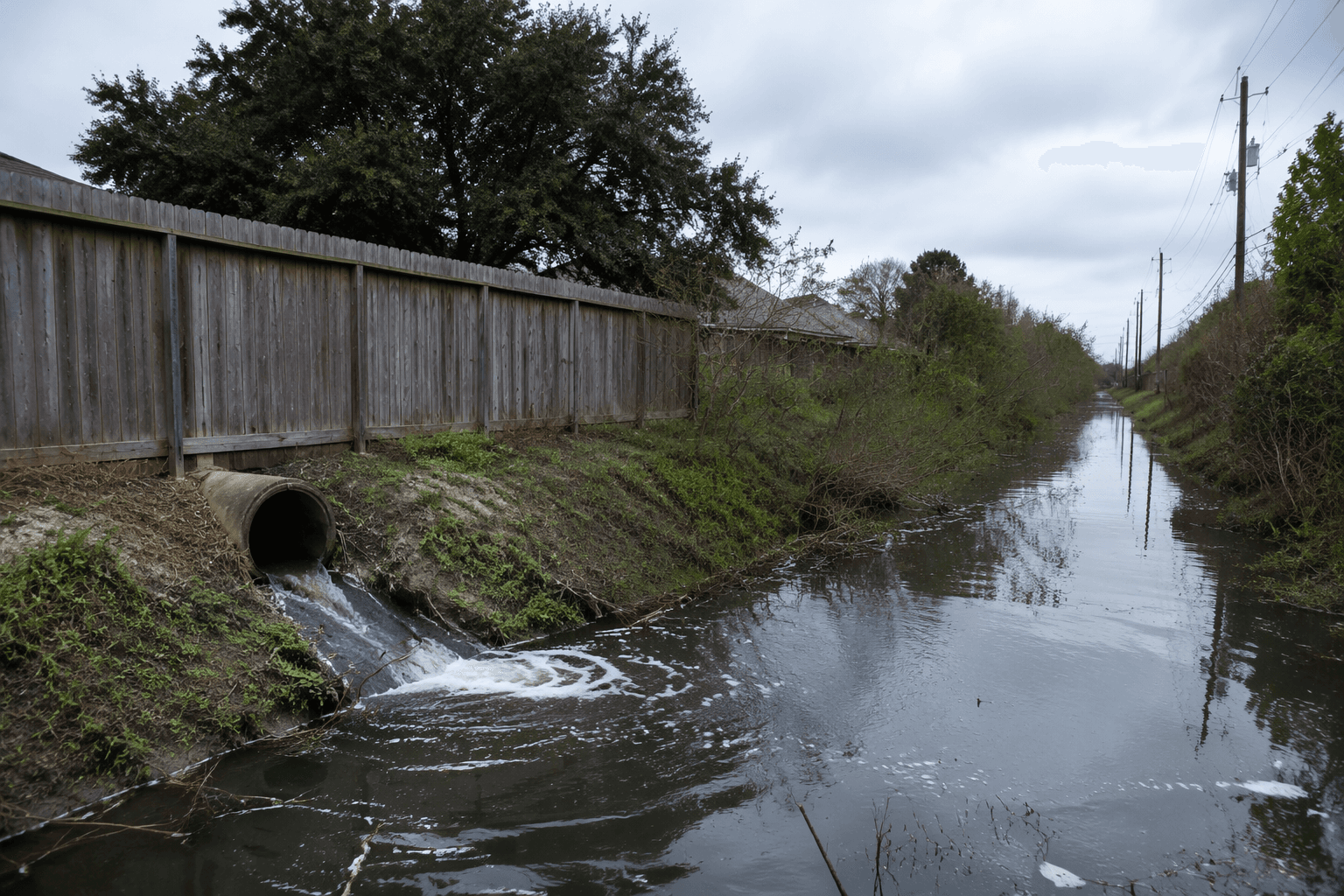
Residents told ABC13 Houston the odor around the ditches smelled like “rotten chicken.” They also said raw sewage had flooded yards, backed into homes and plagued the neighborhood for nearly two decades, a timeline that underscores how long families in the area have lived with the mess and its risks.
By July 22, 2026, Click2Houston reported that Harris County had taken the Roving Meadows wastewater operator back to court after years of sewage complaints from residents. The renewed legal action shows the dispute has outlasted the first round of litigation and remains centered on whether county government can force basic sanitation protections in the affected Crosby neighborhood.
The county’s earlier lawsuit and the follow-up filing both focus on the same core problem: wastewater escaping the treatment system and ending up where people live, drive and play. When sewage reaches ditches, the concern is not just odor. Residents face exposure to bacteria, flooded yards and the possibility that contaminated water can enter homes and linger in low-lying areas after heavy rain.
For Crosby families, the case is still about whether the company will be required to keep sewage in its system and out of the neighborhood ditches that border homes. The next changes residents may see depend on whether the court compels Roving Meadows to stop the discharges that have defined the dispute for years.
This article was produced by Prism’s automated news system from verified source data, official records, and press releases, then run through automated quality and moderation checks before publishing. The system is built and supervised by the people who set the standards it runs under. Read our full AI policy.
Did this article answer your question?