Houston inventor turns recycled mattress foam into sustainable products
A Houston inventor is turning mattress foam into new products, tapping a waste stream big enough to fill NRG Stadium more than once each year.
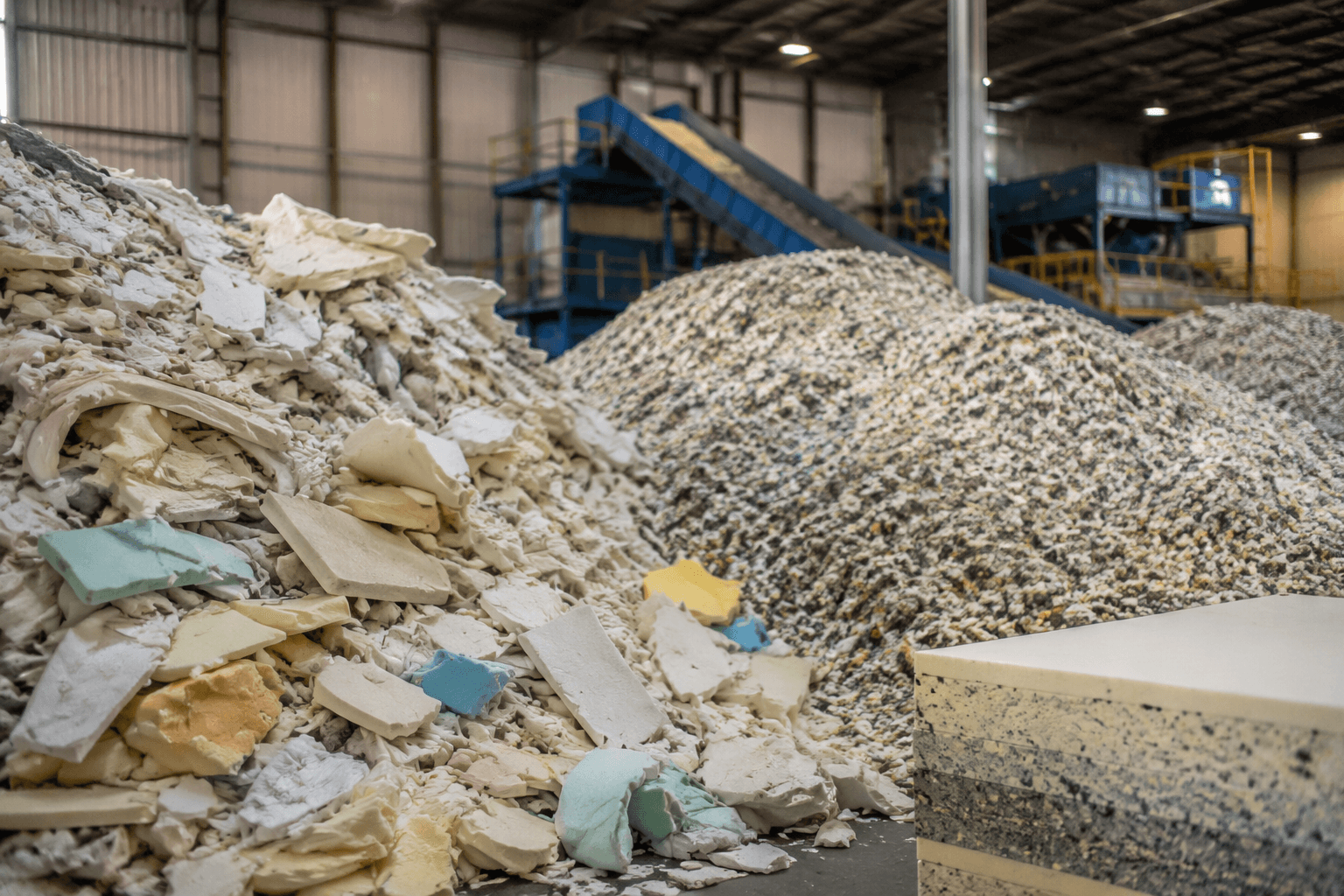
A Houston inventor is giving discarded mattress foam a second life, turning one of the region’s bulkiest waste streams into sustainable products with potential market value. For Harris County, the stakes are plain: the Furniture Bank says more than 700,000 mattresses enter Houston-area landfills each year, a volume it says is enough material to fill NRG Stadium.
Why mattress foam matters in Houston
An old mattress is hard to ignore once it reaches the curb. The Click2Houston video page captures that reality in one blunt line: "Most people see an old mattress as nothing more than bulky trash."
That description fits the local disposal problem. Mattresses are awkward to transport, expensive to break down, and often thrown out long before the foam inside has lost all useful value. In a county as large as Harris County, where homes, apartments, and furniture turnover generate a steady flow of bulky waste, the question is not whether mattresses will be replaced, but what happens to them after pickup.
Local environmental voices have treated mattress recycling as more than a niche issue. Sierra Club Texas Houston has discussed it as part of the broader push to reduce waste, and the scale cited by the Furniture Bank shows why: 700,000 mattresses a year is not a side stream. It is a major landfill burden that touches disposal costs, hauling logistics, and the amount of reusable material that leaves the local economy.
The Houston inventor behind the idea
The inventor at the center of the story is Vahid Serajian, whom a KPRC 2 Facebook post identifies as a Texas A&M graduate and the founder of VitriCycle. That same post says Serajian has spent the last five years developing a way to recycle discarded mattress materials.
His work is built around a practical problem: mattress foam is abundant, but it is usually treated as waste. By pulling usable material out of mattresses and converting it into sustainable products, Serajian is trying to create value from something that would otherwise be dumped.
That approach fits a wider shift in materials recovery. The Mattress Recycling Council has highlighted the possibility of turning recycled mattress foam into sneaker soles, a sign that the idea is not limited to one Houston startup. It is part of a larger circular-economy trend in which products are designed to be broken down and reused in new forms instead of discarded after a single life cycle.
What Houston already does with mattress waste
Houston already has a local example of mattress diversion that shows how this kind of recovery can work at scale. Houston Furniture Bank says its Mattress Recycling & Manufacturing Program reclaims usable materials from mattresses and transforms them into high-quality, low-cost mattresses for families in need.
That program does more than keep material out of the dump. Houston Furniture Bank says it also creates local jobs and workforce training, which matters in a city and county where waste handling can become a labor-intensive part of the economy. Instead of paying only for disposal, the recovered material stays in motion through sorting, processing, and manufacturing.
The model is important because it gives mattress waste a second economic life. A mattress does not have to be a dead-end item once it is removed from a bedroom. With the right system, the same foam and other components can feed a local supply chain that supports both affordability and reuse.
What this could mean for Harris County jobs and costs
The clearest near-term benefit is diversion. If more mattresses and foam are reclaimed before they reach Houston-area landfills, the county can slow the flow of bulky waste that now consumes space and handling capacity. That matters because the 700,000-mattress figure cited by the Furniture Bank suggests even modest gains in diversion could move a lot of material.
There is also a possible economic upside. A recycling operation built around mattress foam can create jobs in collection, sorting, processing, and manufacturing, much like the Houston Furniture Bank’s program already does. If the recovered foam can be turned into saleable products, the same stream of waste could support local business activity instead of only disposal operations.
Any broader payoff would depend on scale. The real test for VitriCycle and similar efforts is whether Houston can collect enough material consistently, process it efficiently, and find steady buyers for the end products. But the local logic is strong: mattress waste is already here, the material is still useful, and Harris County has room for models that reduce landfill pressure while building something productive in its place.
In a region where waste management is usually discussed as a cost, this is a rare story of a trash problem becoming a manufacturing opportunity.
This article was produced by Prism’s automated news system from verified source data, official records, and press releases, then run through automated quality and moderation checks before publishing. The system is built and supervised by the people who set the standards it runs under. Read our full AI policy.
Did this article answer your question?