Texas power demand surge could mean higher bills for Harris County residents
ERCOT says demand could double in six years, and Harris County customers on variable-rate plans are most exposed when summer cooling drives bills up.

ERCOT projects electricity demand could double in six years, while data-center electricity use is projected to rise more than 30 times in that same period.
On April 7 and 8, 2025, ERCOT released a long-term load forecast update for 2025 through 2031 and outlined methodology changes to its adjusted load forecast. The grid operator published a long-term hourly peak demand and energy forecast for the ERCOT region on April 8, 2025, followed by a May 16, 2025 Capacity, Demand and Reserves report that modeled load-resource scenarios and reserve margins for 2026 through 2030.

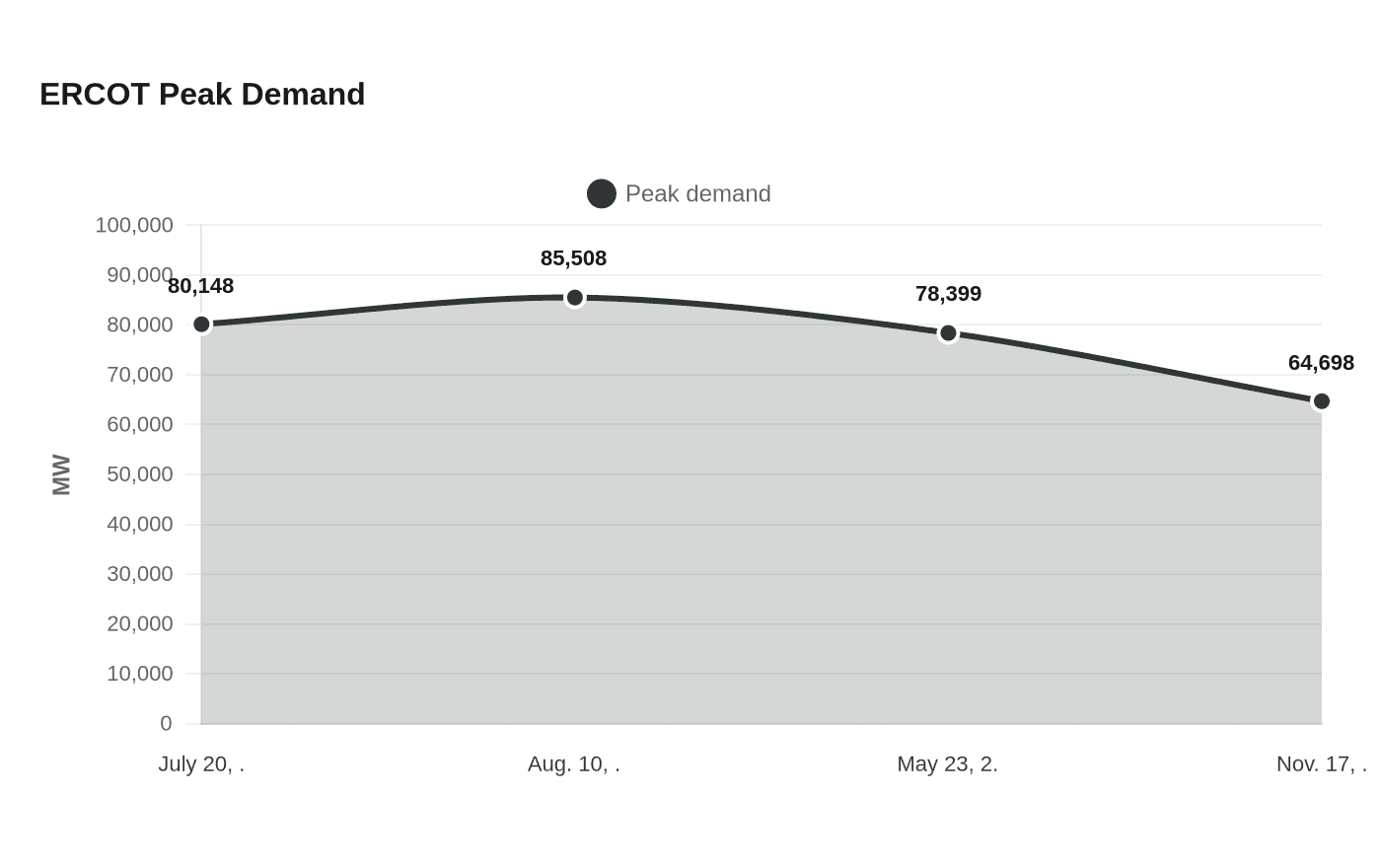
ERCOT’s all-time peak was 85,508 megawatts on Aug. 10, 2023, after a previous high of 80,148 megawatts on July 20, 2022. The grid later reached a new 2025 peak of 78,399 megawatts on May 23, and its November 2025 monthly operations overview put maximum peak demand at 64,698 megawatts on Nov. 17, higher than the November 2024 level. ERCOT then released a preliminary long-term load forecast for 2026 through 2032 on April 15, 2026 for discussion with the Public Utility Commission of Texas.
A fixed-rate plan keeps the price per kilowatt-hour steady through the contract term, aside from possible transmission and distribution fee changes and certain ERCOT or Texas Regional Entity administrative fees. A month-to-month plan can be canceled without an early-termination fee, but in Texas it almost always means a variable rate that can change every billing cycle.
Customers who use a lot of electricity in the summer and have not locked in a fixed price before the next renewal face the biggest exposure. Renters, newer movers and families in homes with heavy cooling needs are most likely to feel a jump when wholesale costs rise, while energy-intensive businesses in Harris County face the same pressure on a larger scale.
This article was produced by Prism’s automated news system from verified source data, official records, and press releases, then run through automated quality and moderation checks before publishing. The system is built and supervised by the people who set the standards it runs under. Read our full AI policy.
Did this article answer your question?