Tomball flooded after 30 minutes of rain, residents say it keeps happening
A Tomball cul-de-sac flooded after about 30 minutes of rain, and residents say the same streets keep going underwater in storm after storm.
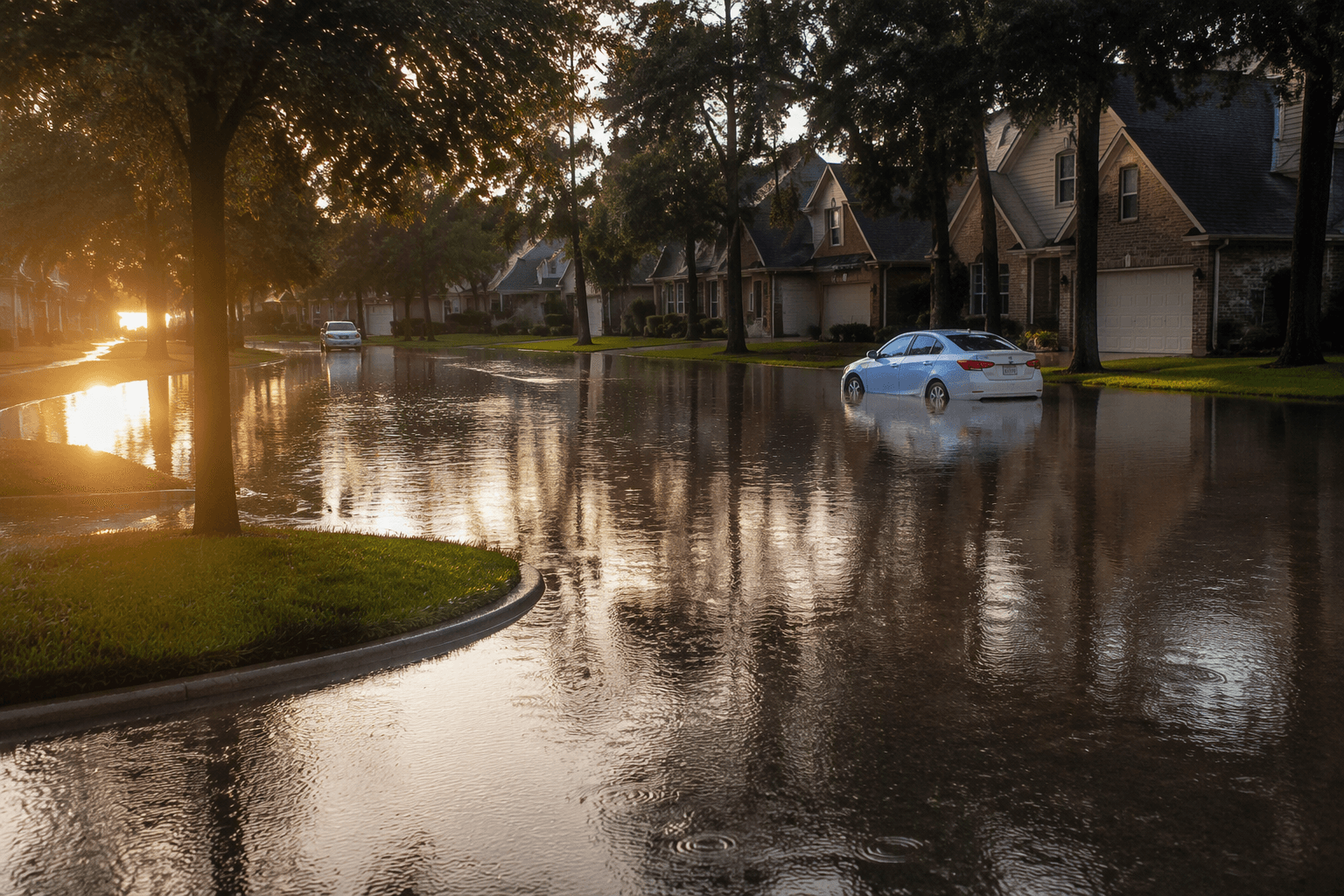
A Tomball neighborhood flooded after about 30 minutes of heavy rain, and residents said the cul-de-sac can become completely underwater after just 30 minutes to an hour. The scene renewed complaints about a drainage problem in northwest Harris County that neighbors say has lingered for decades.
That speed matters because it turns a short burst of rain into a neighborhood shutdown. When water rises that fast, streets can become impassable, yards and homes can take on water, and drivers, small businesses and emergency responders can all be forced to work around blocked access routes. In Tomball, the flooding is not being described as a one-time weather hit but as a repeat occurrence that keeps showing up in the same places.
The Tomball public works department said it is addressing flooding through drainage master plan capital improvement projects. That places the city’s response inside a long-term infrastructure process, one that depends on design, funding and construction rather than a quick patch before the next storm rolls through.
The city’s floodplain-management materials also point to the age of the underlying risk. Tomball’s FEMA floodplain maps became effective June 18, 2007, giving residents and property owners a formal reference point for floodplain areas inside the city. For people living in the hardest-hit parts of town, those maps are part of the paperwork side of a problem they see every time the rain comes hard and fast.
The broader county picture shows why Tomball’s flooding fits into a larger Harris County pattern. The Harris County Flood Control District was created by the Texas Legislature in 1937 and is governed by Harris County Commissioners Court. Its flooding-history material says a major flood occurs somewhere in Harris County about every two years, and the district says it uses capital improvement and active-project programs to reduce flood risk.
For Tomball residents, that countywide context offers little immediate relief. The flooding they described is local, familiar and recurring, and the city’s current answer is still tied to capital projects rather than a finished fix. Until drainage work catches up with the storms, a half-hour of rain can keep turning one Tomball cul-de-sac into a flooded dead end.
This article was produced by Prism’s automated news system from verified source data, official records, and press releases, then run through automated quality and moderation checks before publishing. The system is built and supervised by the people who set the standards it runs under. Read our full AI policy.
Did this article answer your question?